The geology behind the show
Why Iceland has so much lava
A plain guide to the plate boundary, the hotspot and the basalt behind Iceland's eruptions, and to the Katla rock the Lava Show melts and pours.
Reserve your Lava Show seat ↗A plate boundary and a hotspot
Iceland sits on the Mid-Atlantic Ridge, a divergent plate boundary where two tectonic plates move apart. It also sits over a hotspot, a source of rising heat from deep in the Earth. Wikipedia credits this double setting for the country's frequent volcanic activity. The ridge spreads roughly east to west, while the hotspot has drifted slowly over at least 25 million years. Together they explain why eruptions are frequent here and why the island keeps being rebuilt by lava.
Around 30 active systems
Iceland's volcanic activity is spread across a belt of volcanic zones that cross the country from the southwest to the north. Wikipedia counts around 30 active volcanic systems. They include the Reykjanes volcanic belt in the southwest. You do not need to learn the names, only to know that eruptions are not a once-in-a-lifetime event here but part of how the island is built.
Magma, lava and basalt
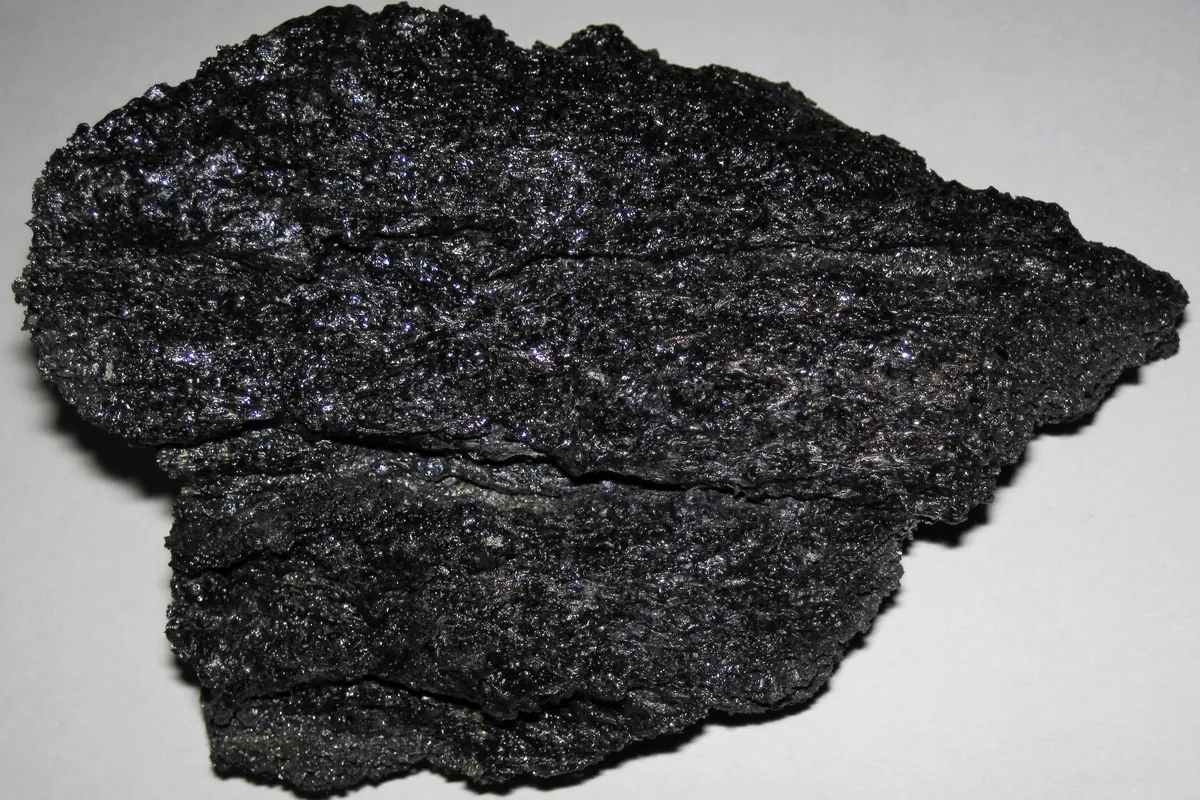
Magma is molten rock inside the Earth. Once it reaches the surface it is called lava, and the solid rock left when lava cools is also called lava. Most of what Icelandic volcanoes produce is basalt: about 92 per cent of the rock erupted since the last ice age. Basalt lava is runny, with a thickness often compared to ketchup, though still thousands of times thicker than water. That is why it spreads in wide, flat flows, and it is part of what makes a lava show possible.
Two textures: pāhoehoe and ʻaʻā
Icelandic basalt lava sets in two main forms, and both have Icelandic names. Smooth, fluid pāhoehoe, called helluhraun in Icelandic, forms lava fields that are fairly easy to walk across. Thicker, stickier ʻaʻā, called apalhraun, has a rough, sharp surface that makes hiking difficult, slow and dangerous. Lava forms an insulating crust quickly, so the inside can stay molten for a long time, and it cracks as it cools. Basalt often breaks into vertical columns, a shape you can see at Reynisfjara, near Vík.
Effusive and explosive eruptions
The venue's blog explains that eruptions come in two broad styles. Runny, low-silica lava such as basalt flows easily and can travel long distances, which is called effusive. Thicker lava with more silica traps gas, so pressure builds and the eruption is more likely to be explosive. A lava show recreates the effusive kind: a controlled flow of runny basalt. Knowing the difference helps when you read news about an eruption, because a flowing eruption and an explosive one carry very different risks.
Katla and the 1918 rock
Katla lies under the Mýrdalsjökull glacier, north of Vík and east of Eyjafjallajökull. Wikipedia says its 1918 eruption began on 12 October of that year and lasted 24 days. The Lava Show says the lava it melts at both venues comes from that eruption, and that the rock is heated until it melts before it is poured. The detail links the two: the Vík venue lies south of the volcano that supplied the rock, and the Reykjavík venue uses the same rock.
Eruptions near Reykjavík
The Reykjanes Peninsula, southwest of the capital, has been active in recent years. An eruption fissure opened on 19 March 2021 in Geldingadalur, near Grindavík, and a second eruption followed there from 3 to 21 August 2022. If you read about these eruptions and want to see one, remember that eruption sites can be closed at short notice because of volcanic gases and unstable ground, and lava may not be visible from public viewing areas. Check Safetravel and follow local guidance. A showroom that pours lava indoors is the reliable alternative.
Who this isn't for
If you want to learn geology from rocks and maps rather than from a live show, a museum or a guided field trip suits you better. If you want to see an active eruption, no ticket can promise one, because eruptions come when the volcano decides. And if the science is too much for a young child, the show works as spectacle first, with the explanation delivered by a live host.
Sources